Mod Features
Download the latest version Fire Engine Simulator Mod APK v(Free purchase):
Free In-App Purchase
Fire Engine Simulator App Detail
Immersive Firefighting Simulation Gameplay Overview
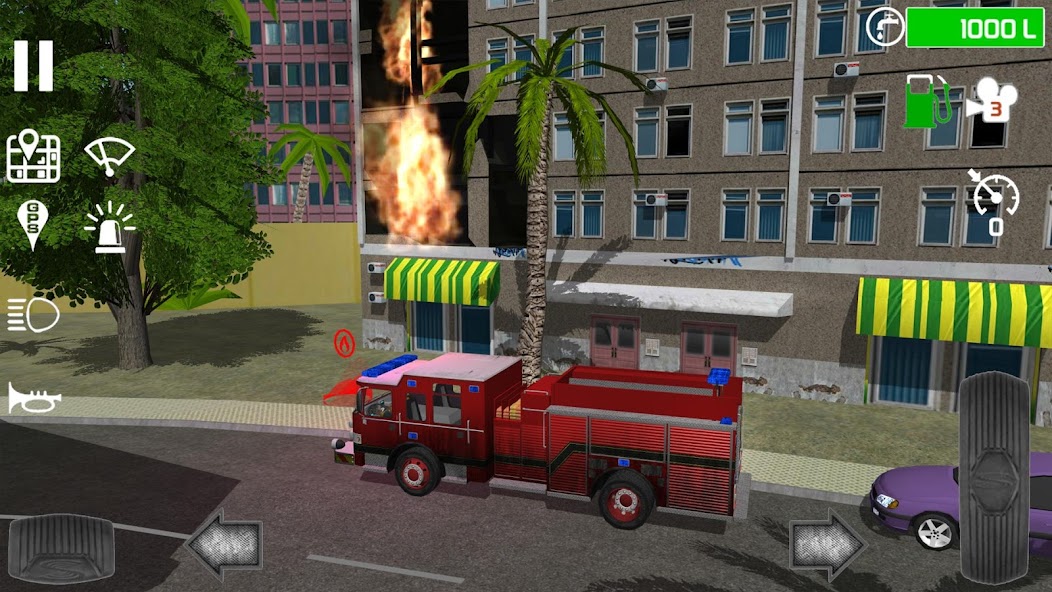
Fire Engine Simulator Mod delivers an immersive, mission-driven experience that places players in the boots of modern firefighters responding to realistic emergency scenarios. The mod expands base gameplay with a variety of mission types — structural fires, vehicle accidents, hazardous material incidents, and search-and-rescue operations — each requiring different tactics and equipment. Players must assess scenes, establish incident command, deploy hoses and ladders, ventilate structures, perform patient triage, and coordinate with AI or human crew members. Objective-based progression rewards strategic planning and efficient resource use rather than pure speed; mistakes such as water overpressure or poor safety can escalate situations. The mod integrates dynamic weather and time-of-day cycles, which affect visibility, fire spread, and driving conditions, increasing situational challenge. A user-friendly HUD and mission briefings help players prepare while allowing room for emergent gameplay when unplanned hazards occur. Difficulty settings adjust AI aggressiveness and physics realism, making the mod approachable for casual players but deep enough for simulation enthusiasts. Overall, the gameplay focus is on authentic procedures, teamwork, and problem solving, giving a satisfying blend of adrenaline and tactical depth for fans of emergency services simulations.
Detailed Vehicle and Equipment Systems Explained
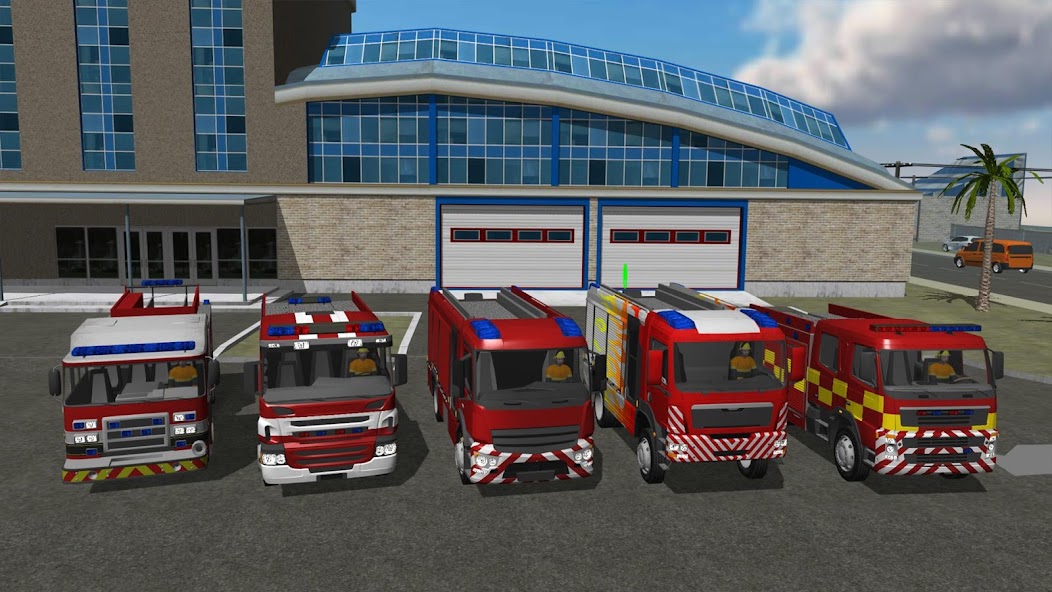
The mod significantly enhances vehicle and equipment mechanics to mirror real-world fire apparatus and tools. Engines, ladder trucks, pumpers, tankers, and specialized units like hazmat and rescue rigs are modeled with accurate weight, handling, and compartment layouts. Pump panels present realistic control interfaces: players manage pressure, RPM, intake lines, foam selectors, and discharge flows to match nozzle requirements. Hose management includes drag physics, coupling connections, and choice of hose diameter impacting flow and reach. Ladder mechanics support extension, rotation, and payload limits, and aerial platforms factor in stabilization and operator access. Tools such as thermal cameras, hydraulic rescue spreaders (jaws of life), extinguishers, chain saws, and ventilation fans have specific uses and animations, encouraging role specialization among crew. Equipment wear and maintenance are simulated, requiring routine checks and resulting in reduced performance if neglected. Visual equipment bays and inventory UIs allow quick assignment and retrieval, while customization options let players add auxiliary lights, signage, and interior fittings. This depth creates a compelling tactile experience where knowledge of apparatus operation materially affects mission outcomes, rewarding players who learn the systems and apply them under pressure.
Realistic Physics, Water Dynamics and Damage
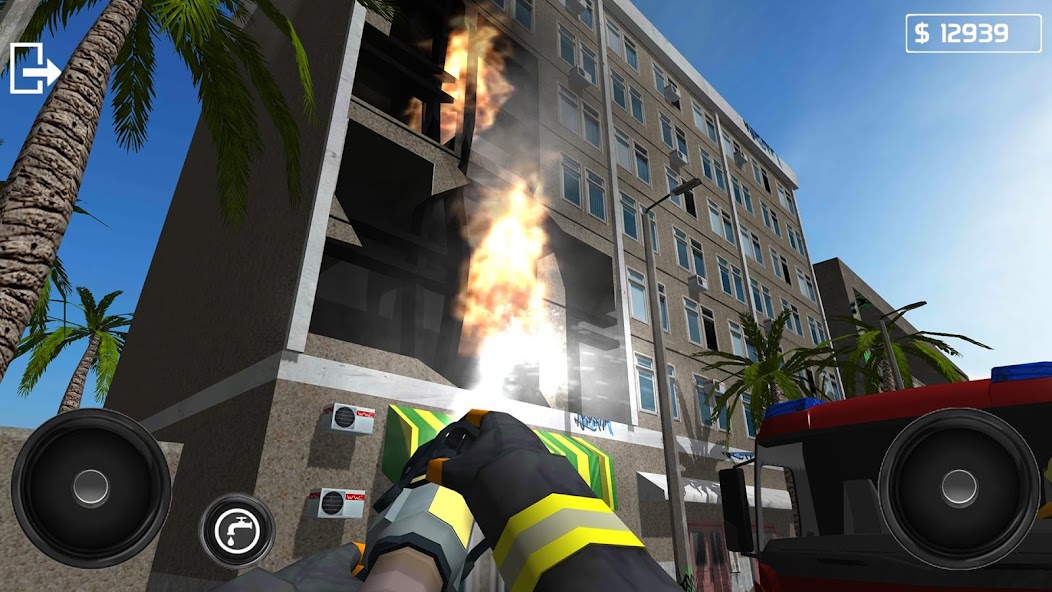
A core strength of the Fire Engine Simulator Mod is its attention to physics and fluid dynamics, which brings firefighting mechanics to life. The mod implements a water simulation that models flow rates, nozzle patterns, pressure loss over distance, and the cooling effect on fire behavior. Foam systems work by altering fuel-air interactions to suppress certain types of fires, requiring correct percentage mixes and application strategies. Structural fire spread uses a heat transfer model where materials have varying ignition points, conduction, and burn rates; ventilation and wind influence flame propagation and backdraft risks. Vehicle and building damage are calculated from collision forces, heat exposure, and water saturation, producing believable collapse or impairment that changes tactical options mid-incident. Ropes, ladders, and carried equipment have physics-driven movement and weight, affecting how crew members maneuver. Fire engine handling responds to load distribution and water tank levels, creating different driving dynamics as missions progress. These systems combine to create emergent challenges: a poor pump setup will reduce extinguishing effectiveness, while neglecting structural integrity can lead to sudden hazards. The realistic physics demand thoughtful, adaptive play and enhance the satisfaction when operations are executed correctly.
Extensive Modding Tools And Customization Options
Designed with a modder-friendly mindset, the Fire Engine Simulator Mod ships with tools and templates that encourage community-driven expansion. Content creators can craft new vehicles, uniforms, equipment, and mission scripts using provided asset packs and documentation. Vehicle configurators allow adjustment of physical parameters, compartment layouts, sound sets, and lighting patterns, while a visual editor supports skinning and decal placement for realistic fleet liveries. Mission editors let authors design scenario flowcharts, set triggers, spawn points, and environmental variables like wind, temperature, and traffic. Scripting hooks expose in-game events and AI behaviors, enabling complex multi-stage incidents and support for cooperative multiplayer scenarios. The mod also supports modular add-ons for audio, UI themes, and telemetry overlays for training use. Workshop integration and version-safe update routines make sharing and installing community content straightforward, with dependency resolution to prevent conflicts. For players who prefer customization without deep technical work, an in-game configuration menu provides toggles for equipment loadouts, HUD elements, and realism sliders. This extensibility ensures the mod can evolve far beyond its base feature set, fostering a vibrant ecosystem of user-made content and specialized tools tailored to diverse communities.
Multiplayer Missions And Cooperative Fire Responses
The mod emphasizes cooperative gameplay by supporting multiplayer missions where teams of players assume different roles within an incident command structure. Players can function as engine operators, ladder technicians, rescue teams, medics, or incident commanders, requiring coordination and communication to manage resources effectively. Multiplayer features include shared task assignment, synchronized vehicle states, and voice/text commands for chains of command and tactical updates. Larger-scale incidents can spawn multiple simultaneous objectives where teams must prioritize and allocate assets under time pressure. Matchmaking and custom server support enable both casual drop-in sessions and structured, role-based campaigns running regular shifts or training schedules. Persistent progression systems track team statistics, certifications, and unlocked gear, which can be used in roleplay or competitive formats like timed response drills. Anti-griefing measures, admin tools, and permission layers ensure smooth cooperative play, while replay and debrief modes record missions for performance review and learning. This cooperative focus turns firefighting into a social, strategic endeavor, rewarding clear communication and disciplined execution, and making the mod suitable for groups ranging from friends playing casually to organized public-safety simulation clubs.
Use In Training: Educational And Professional Applications
Beyond entertainment, the Fire Engine Simulator Mod is useful as an educational tool for fire academies, volunteer brigades, and emergency management instructors. Its accurate vehicle controls, pump operations, and incident scenarios provide a low-risk environment to teach standard operating procedures, incident command principles, and decision-making under stress. Instructors can design training modules that replicate local infrastructure, common call types, and department-specific tactics, allowing recruits to practice hose advancement, water supply setup, search patterns, and evacuation protocols. The mod’s telemetry and debrief features capture key performance metrics — water flow efficiency, task completion times, crew positioning, and safety compliance — enabling objective feedback and measurable improvement. Custom scenarios can simulate rare but critical events such as hazardous material exposures or structural collapse, helping teams rehearse responses that would be difficult or unsafe to replicate live. When paired with classroom instruction and hands-on drills, the simulator enhances retention through repeated, varied practice. For professional users, the mod offers a cost-effective supplementary training platform that complements live exercises, supports remote instruction, and helps prepare personnel for a wider range of incident variables.
High-Fidelity Visuals, Sound Design And Immersion
A key pillar of the mod is its focus on audiovisual immersion to convey the urgency and atmosphere of firefighting operations. High-resolution vehicle models, detailed interiors, and textured equipment deliver a convincing tactile feel when accessing compartments or operating controls. Fire and smoke rendering employ layered particle systems, volumetric lighting, and dynamic shadows to represent heat, opacity, and light scattering realistically, with thermal camera overlays that simulate infrared imaging for search tasks. Environmental effects such as rain, fog, and dust change visibility and interplay with lighting to create variable mission moods. Sound design complements visuals with nuanced engine tones, pump whine, hose crackles, radio chatter, and environmental ambient noise; spatial audio ensures players can localize hazards and team members. UI and HUD elements are purposefully minimal to preserve immersion, offering context-sensitive prompts and realistic dispatch messages rather than intrusive icons. Scene cinematic tools are included for multiplayer debriefs and community content creators to film rescue sequences or tutorial footage. The combined visual and audio fidelity heightens emotional engagement and supports both cinematic storytelling and practical training scenarios.
Easy Installation, Cross-Platform Compatibility Details
The Fire Engine Simulator Mod is designed for straightforward installation and broad compatibility to reach a wide audience. Installation is supported through major workshop platforms and includes an auto-installer that places files in the correct directories, resolves dependencies, and checks for version mismatches. Manual installation is documented step-by-step for advanced users or custom setups. The mod is optimized to run across a range of hardware by offering scalable graphics settings, LOD adjustments, and selective physics toggles so lower-end systems can prioritize performance while high-end rigs enjoy maximum fidelity. Cross-platform considerations include input mapping for controllers, keyboard, and mouse, plus configurable VR support where available, adapting UI and interaction models for different devices. Save and configuration formats aim for portability, allowing players to move profiles and custom content between machines. Compatibility notes and known conflicts are maintained in a public changelog, and compatibility layers help integrate the mod with popular base-game expansions. These efforts minimize barriers to entry and let teams with diverse setups participate without sacrificing core features.
Ongoing Support, Updates And Community Engagement
Sustained development and active community engagement are core commitments for the Fire Engine Simulator Mod project. A public roadmap outlines planned features, balance adjustments, and tooling improvements, while regular patch cycles address bug fixes, performance optimizations, and user-requested enhancements. The development team maintains transparent communication via forums, a dedicated Discord, and a workshop page where players can report issues, request features, and showcase community creations. Moderated servers and content-curation tools surface high-quality user mods, while documentation and tutorial videos help newcomers and modders get started. Periodic developer livestreams and Q&A sessions encourage feedback and provide insight into design decisions. For enterprise or training users, optional consultancy and customization services are available to adapt scenarios, vehicles, or telemetry exports to institutional needs. A volunteer moderation and tester program helps ensure updates are stable and that community guidelines are upheld. This combination of structured support, open dialogue, and community empowerment helps the mod remain relevant, reliable, and creatively vibrant over time.
HappyMod