Node Video icon

Node Video Mod APK (Unlocked)

  • Free
  • 5.0
    65729
  • 2,449
  • V8.6.0
Information
Older versions

Mod Features

Download the latest version Node Video Mod APK v(Unlocked):
Lifetime Unlocked

Node Video App Detail

Comprehensive Overview of Node Video Mod

Node Video - Pro Video Editor Mod is a feature-rich mobile and desktop video editing application offered as a modified version that unlocks premium tools and removes restrictions. This overview explains the app’s core purpose: to provide an accessible, non-linear editing environment that supports multi-track timelines, real-time previewing, advanced compositing, and a broad suite of effects. The Mod variant typically includes unlocked filters, transitions, and export options that are otherwise gated behind in-app purchases or subscriptions. It aims to combine professional-grade tools with an intuitive interface suitable for creators, influencers, and hobbyists. Important components include a node-based compositing system that allows users to connect effects and media elements in a flexible flow rather than a strictly stacked layer model, offering greater control over complex visual processing. The Mod also tends to enable full-resolution exports, watermark removal, and access to premium effect packs. While discussing capabilities, it’s crucial to acknowledge version compatibility and stability: Mods can vary, and users should evaluate their source and test stability, performance, and any implications for support and updates. Overall, this modified edition is positioned as a cost-free path to unlocking advanced editing capabilities within the Node Video ecosystem.

Key Features and Functional Highlights

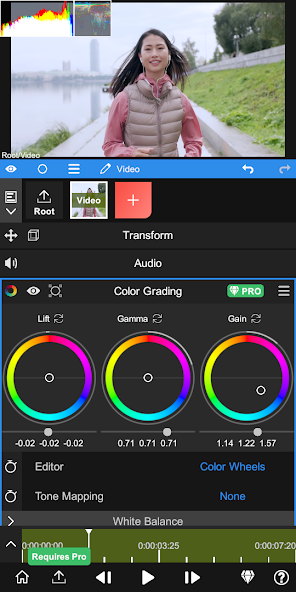
Node Video Mod delivers an extensive feature set that elevates mobile and lightweight desktop editing. Core features typically include a node-based editor that enables complex effect chains, multi-layer video and audio tracks, precision keyframe animation, masking tools, and chroma key (green screen) compositing. The Mod often unlocks advanced filters, LUTs, and transition packs, while offering granular color correction tools such as curves, HSL controls, and selective color grading. Audio tools may include multi-track mixing, volume envelopes, noise reduction, and support for external audio imports. Performance features include proxy editing, hardware acceleration, and pre-render caching to maintain smooth scrubbing on high-resolution footage. Export options are usually broadened in the Mod to allow higher resolutions, custom bitrate settings, and a wider array of codecs and container formats. Additional conveniences often unlocked are batch export, preset management, advanced timeline snapping, and gesture-driven trimming. The feature set is designed to support everything from quick social-media clips to more elaborate short films, giving creators the flexibility to iterate rapidly while maintaining technical control over final output quality.

User Interface and Workflow Efficiency

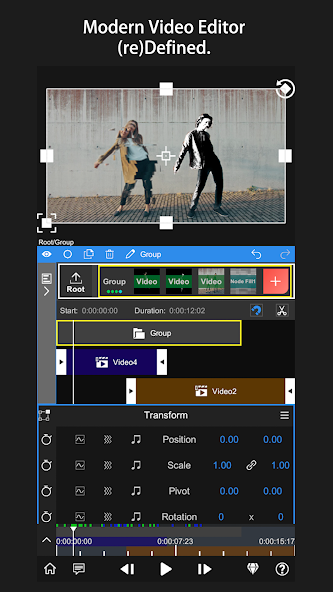
Node Video Mod emphasizes a streamlined yet powerful user interface that balances accessibility with depth. The node-based visual approach replaces or complements traditional stacked layers, representing effects and media as modular nodes that can be linked, rearranged, and animated. This allows for non-destructive workflows where changes propagate dynamically, making experimentation fast and reversible. The timeline is designed for precision editing with zoomable scrubbing, snap guides, and keyboard or gesture shortcuts for rapid trimming and ripple edits. The UI typically provides context-sensitive inspectors for real-time parameter adjustments, keyframe timelines for motion and effect animation, and a preview window with frame-accurate playback. To speed common tasks, the Mod often includes templates, project presets, and effect presets that can be applied and customized. Workflow integrations like direct media import from cloud services or camera roll, drag-and-drop transitions, and proxy workflows for large files further boost efficiency. For collaborative environments, features such as project export/import and readable project files facilitate handoffs between users. Overall, the interface aims to minimize friction so creators can focus on storytelling and aesthetics rather than fighting the tool.

Advanced Editing Tools and Compositing

Node Video Mod provides advanced editing and compositing tools typically found in higher-end desktop software. Central to its power is the node graph that supports branching, merging, and procedural workflows—ideal for complex visual effects, layered transitions, and multi-pass color grading. Users can apply masks, rotoscoping techniques, and motion tracking to attach elements to moving subjects. The Mod often includes advanced keying algorithms for cleaner chroma key results, blend modes for sophisticated layer interactions, and displacement maps for dynamic visual distortions. Time-based tools like retiming, optical flow-based slow motion, and frame interpolation enhance motion control. Comprehensive keyframing enables nuanced parameter animation across nearly every property, including effects intensity, transform properties, and audio automation. Integration of vector shapes and text with path animation allows for advanced titling and motion graphics. Many Mods unlock premium effect packs—particle systems, glows, cinematic flares, and stylized looks—which when combined with masks and blend modes enable cinematic-grade composites on mobile or lightweight hardware.

Performance, Optimization, and Hardware Use

Performance is a critical dimension for an editor like Node Video Mod, and the Modded variants usually optimize or enable features to maximize speed and responsiveness. Performance strategies include proxy workflows that generate lower-resolution edit proxies for smooth timeline interaction, background rendering and cache systems that precompute complex nodes, and hardware acceleration to leverage GPU capabilities for real-time effects. Efficient memory management and media decoding optimizations help when dealing with high-resolution footage (4K and beyond). Some Mods may tweak settings to bypass premium limitations on export bitrate and resolution, but users must be mindful of device thermal throttling and storage throughput when exporting large files. The app often supports multi-threaded operations and efficient codec utilization to reduce render times. For mobile users, power profiles and battery considerations are important—some Mods may disable background limits or add aggressive caching which improves performance but can increase power draw. Overall, when used correctly, the Mod delivers smoother editing workflows and faster exports compared to the stock, restricted version, particularly on capable hardware.

Effects Library and Creative Resources

An expansive effects library is a cornerstone of Node Video Mod, offering creative building blocks for unique visual styles. The Mod typically unlocks premium effects, transitions, LUT packs, and stylistic overlays that would otherwise require purchase. Effects range from simple color tweaks and film grain to complex particle systems, light leaks, lens flares, and stylized distortions. Transition libraries often include smooth morphs, 3D-like page turns, glitch effects, and customizable wipe types. Creative resources extend to animated presets for text and lower thirds, shape generators, and motion templates that speed up producing polished segments. The availability of LUTs and film emulation packs enables rapid grading to achieve cinematic tones or social-media-friendly aesthetics. Many Mods also include community-shared presets that can be imported and adapted, fostering rapid stylistic iteration. This breadth of resources allows creators to experiment quickly with looks, iterate on mood and pacing, and deliver visually consistent outputs across multiple projects without rebuilding complex nodes from scratch.

Audio Features and Sound Design Capabilities

Strong audio tools are essential for professional-looking video productions, and Node Video Mod enhances sound design capabilities beyond basic trims and volume adjustments. Typical audio features include multi-track mixing with per-track EQ, compressors, and spatial effects, enabling cleaner dialogue and richer soundscapes. The Mod often unlocks noise reduction and de-esser tools to improve vocal clarity, as well as reverb and delay effects for ambience. Sound designers can apply automation curves and keyframed volume changes, layer music under dialogue with ducking, and align audio precisely to video using waveform views and snap-to-transient functionality. Support for importing external audio files, VST-like plugin integration (if supported on the platform), and tempo-aware editing for music beds further extend possibilities. Export options frequently include higher-quality audio bitrates and multi-channel exports for safe mastering. Well-integrated audio workflows let creators balance technical polish with artistic choices, ensuring the soundtrack complements visuals and strengthens audience engagement.

Exporting Options, Formats, and Delivery

Node Video Mod usually broadens exporting flexibility to meet varied delivery needs, from social media clips to high-quality archival masters. Export options in the Mod often include unrestricted resolutions (up to 4K and beyond), customizable bitrate and codec choices (H.264, H.265/HEVC, ProRes variants where supported), and container formats like MP4, MOV, and MKV. Advanced presets for platforms—YouTube, Instagram, TikTok, and Vimeo—make it easier to meet platform-specific requirements, including aspect ratios and bitrate recommendations. Batch export capabilities enable rendering multiple sequences or variations in a single job, saving time for repetitive tasks. Some Mods allow more granular audio export settings including sample rate, bit depth, and channel mapping. Metadata embedding, closed captions, and subtitle export may also be available for accessibility and distribution. Attention to color space, gamma handling, and LUT embedding ensures consistent color reproduction across devices. Overall, the enhanced export suite empowers creators to deliver optimized media files tailored to final distribution platforms while maintaining maximum control over quality and file size.

Use Cases, Target Audience, and Considerations

Node Video Mod appeals to a broad range of users, from social-media creators and vloggers to indie filmmakers and multimedia designers. Use cases include quick turnaround social clips, motion-graphics-driven product promos, educational explainer videos, short films, and experimental visual art. Its node-based approach makes it particularly valuable for projects requiring layered compositing and procedural effects. The Mod version lowers barriers by unlocking premium assets and export capabilities, making advanced tools accessible to budget-conscious creators. However, users should consider trade-offs: Mods are unofficial and may affect app stability, update compatibility, or security. They can lack support from the original developer and may carry legal or ethical implications depending on distribution and licensing. Creators should weigh benefits against potential risks, ensure backups of original media and project files, and use reliable sources for software. For teams and professionals who require vendor support and guaranteed updates, the official licensed version may be preferable. For solo creators seeking maximum creative tools without immediate cost, the Mod can be a powerful, practical option when used responsibly.

  • screenshots
  • screenshots
  • screenshots
  • screenshots
  • screenshots

App Info


Alternative apps

Node Video icon

Node Video Mod APK (Unlocked)

  • Free
  • 5.0
    65729
  • 2,449
  • V8.6.0

User reviews About Node Video Mod App

0

0 reviews

More From developer

Alternatives toNode Video